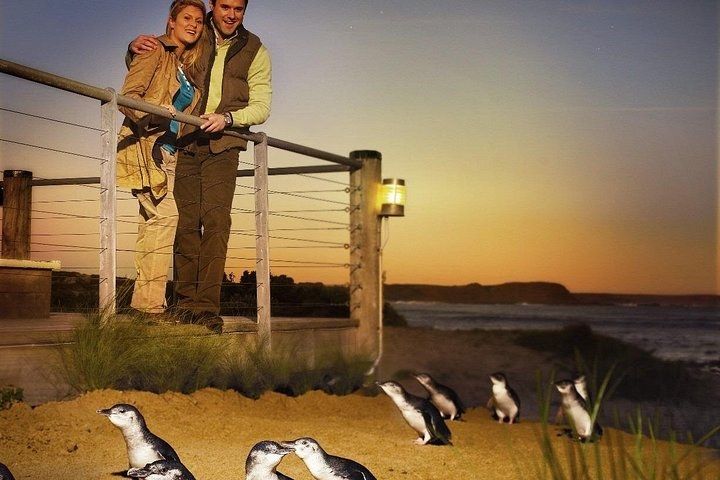
In shortNo month leaves you with an empty beach, because the sunset crossing at Summerland Beach runs every night of the calendar, which leaves numbers, weather and finish time as the things actually worth choosing on. November is the best balance: the 2021 nightly average peaked near 2,300 birds, and the mid-December to late January crush had not started. Winter gives you fewer penguins, the earliest finish and the thinnest crowds.
about 2,300nightly average, November 2021
about 700nightly average, July 2021
24.4°CFebruary mean maximum, Rhyll
17.5 to 18 daysmedian moult ashore
Best time to see penguins, Phillip Island: four things decide it
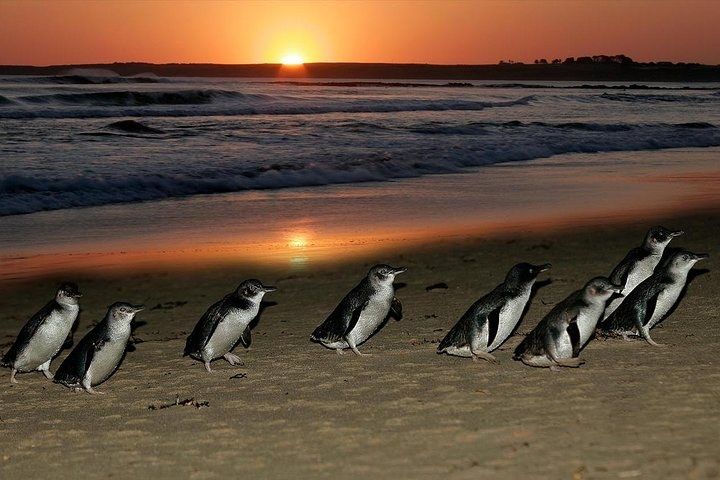
November is the month to aim for. The month-by-month record kept by the guides, who tally every bird crossing the sand, puts the 2021 nightly average at roughly 2,300 in November and roughly 700 in July, the year's high and low. Breeding runs August to February, so by November adults are shuttling food back to chicks in the burrows, and the declared peak crowding of mid-December to late January is still weeks off.
No month is a wasted trip. Not a single date in the year is skipped, and the forecast changes nothing either, since the colony lands in whatever conditions the evening brings. What shifts between June and January is everything around them: how many come ashore, how cold and wet the stand is, how long you wait for dark and how many people sit beside you.
- Numbers on the sand: highest in the breeding months from August to February, lowest in midwinter, thinner again during the moult.
- Finish time: the crossing tracks sunset and moves by roughly two hours across the year, so a winter night ends much earlier than a January one.
- Conditions: the viewing stands are open air on a south-facing coast, and July at Rhyll averages a 13.4°C maximum and an 8.2°C minimum.
- Crowds: the operator flags mid-December to late January, long weekends and school holidays as its peak dates, and on those nights it tells you to allow extra travel time and not to count on a seat even holding a ticket.
Phillip Island penguins season, month by month
Breeding starts in August. Both parents take turns on the eggs, which hatch after about 35 days, and the chicks first go to sea at around eight weeks old. That cycle is why spring and early summer put the most adults on the beach: every bird with a chick in a burrow has to come back and feed it.
February changes the picture. The moult usually begins in the second half of the month, with the earliest birds starting mid to late January, and a moulting penguin stays ashore a median of 17.5 to 18 days while it fasts and loses close to half its body mass. Fewer birds cross the sand in that stretch. February is also the warmest and driest month on the island, which makes for a comfortable evening if you feel the cold.
| Month | What the penguins are doing | Conditions at Rhyll | Crowding |
|---|
| January | Breeding season; the earliest birds start moulting mid to late January | Warm, long daylight, the latest finishes of the year | Declared peak until late January |
|---|
| February | Moult usually starts in the second half; birds ashore a median 17.5 to 18 days | Warmest and driest month, 24.4°C mean maximum and 37.0 mm | Peak over once January ends |
|---|
| March to May | Breeding finished; adults spend long spells at sea between visits | Cooling, sunset earlier every week | Quiet apart from long weekends and school holidays |
|---|
| June to July | Fewest crossings of the year; July 2021 averaged roughly 700 a night | Coolest month, 13.4°C maximum and 8.2°C minimum in July | Quietest of the year, earliest finish |
|---|
| August | Breeding season opens | Wettest month of the year at 76.6 mm | Quiet outside school holidays |
|---|
| September to October | Breeding under way; short-tailed shearwaters return from late September | Mild, daylight stretching out | Busier on long weekends |
|---|
| November | Chicks being fed; 2021 nightly average near 2,300, the year's high | Mild evenings, sunsets getting late | Moderate, before the December surge |
|---|
| December | Breeding continues through the month | Warm, latest sunsets | Declared peak from mid-December |
|---|
Koalas by day, penguins after dark
A 9.5-hour run from Melbourne that fills the long afternoon before sunset at the Koala Conservation Reserve, then puts you at general viewing for the crossing. The departure time already shifts between winter and summer.
★ 4.8/5 · 928 reviews
Cold, wind and rain on a south-facing beach
The parade goes ahead in every kind of weather, because the birds come in regardless, so the forecast only decides how comfortable you are while you sit. Phillip Island Nature Parks does not vary its packing list by season: warm clothes, a raincoat whenever rain looks likely, and a rug for the grandstand seats. In June, July and August, take that advice literally.
Across the full year the Rhyll gauge collects 697.4 mm of rain and sits between a mean maximum of 18.8°C and a mean minimum of 11.8°C, which is the baseline your chosen month moves above or below. The wettest figure on that table belongs to August at 76.6 mm, which is also the month breeding opens and numbers begin climbing. A weather station also understates the wind off Bass Strait at dusk, so dress for several degrees below whatever your phone shows for Cowes.
Summer is the easy season for clothing and the awkward one for timing. February gives you the warmest and driest evening on the calendar, and in exchange you sit through the moult period, when fewer birds cross. The site is cashless throughout, so a contactless card covers dinner and anything you buy to keep warm.
How late the night finishes in each season
Arrival tracks sunset, so the whole evening slides by roughly two hours between midwinter and midsummer. In winter the visitor centre starts filling from about 4pm; in summer it is nearer 6pm, by the operator's own description, and a Penguin Arrival Calendar carries an estimated time for every individual date. Look your own date up there instead of working from a seasonal range.
Add the travel to that estimate. The official site allows about 90 minutes of driving from Melbourne to the island, plus another 20 minutes from the San Remo bridge out to 1019 Ventnor Rd, Summerlands, at the western tip. Work back a full hour from the estimate if you hold General Viewing, Penguins Plus or Penguins Premium, and half an hour for Underground Viewing, which are the lead times each one is asked to allow. In January that arithmetic puts you back in the city well into the night; in July you can be home at a normal hour.
Getting back is where summer bites. V/Line coaches from Southern Cross Station run only as far as Cowes, nothing returns to Melbourne after the crossing, and island roads carry wildlife at dusk and through the night. A tour from Melbourne covers both legs.
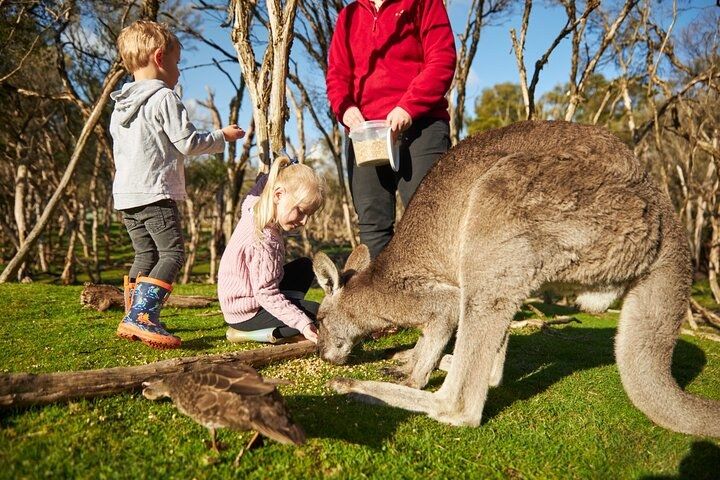
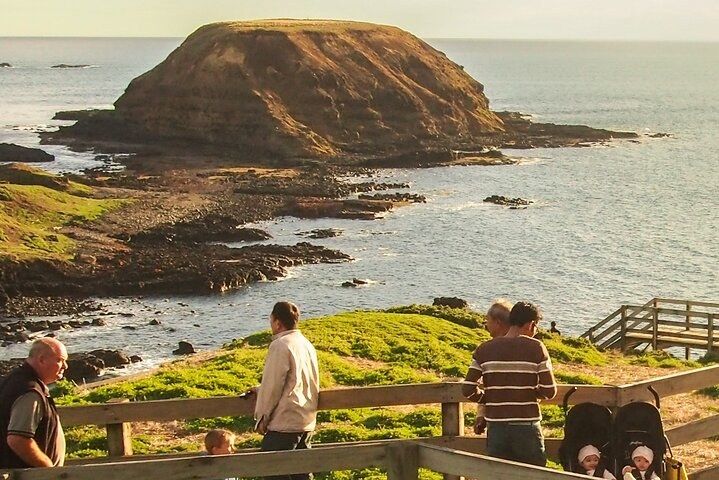
Use the hour of daylight before the crossing. The boardwalks reliably produce swamp wallabies, Eastern barred bandicoots, Cape Barren geese and short-tailed shearwaters while the light holds, and that window is also the only part of the evening when a camera is usable: after sunset, cameras, camcorders and phone cameras are all off limits.
The dates to avoid, and what to do if you are stuck with them
More than 700,000 people a year pass through this one beach, and mid-December to late January, long weekends and school holidays take the worst of it. Nature Parks warns that those periods need extra travel time and that a seat is not guaranteed even once you hold a ticket. Pick a weeknight in one of the shoulder months and the penguins are just as certain while the stand around you is far emptier.
If someone else's school calendar fixes your dates, book early and arrive at the early end of the recommended window rather than the late end. Eating on site works out cheaper on an ordinary weekday, since Sunday adds 10 per cent to food and drink and a public holiday adds 15 per cent. Christmas Day runs as normal in the evening, with the visitor centre opening at 2pm instead of midday.
Matching the tour format to the month you picked
Once the month is fixed, the finish time decides the format. Winter and the shoulder months end early enough that a structured day with a daytime stop still gets you back at a reasonable hour. Long summer evenings push everything later, so a departure that leaves Melbourne in the afternoon suits December and January better than an early start that leaves you hours to fill. The two starting prices further down are per person and quoted in Australian dollars.
The Koalas Tour lists live commentary in English, and the Wildlife Tour a live English guide plus app audio in other languages. Both listings refund in full when you cancel at least 24 hours before the scheduled departure, which helps if a summer date slips.
- For an early finish in winter or the shoulder months: the Phillip Island Penguin Parade and Koalas Tour from Melbourne, 9.5 hours, from A$180, rated 4.8 (928 reviews). You ride a premium coach with live commentary, see the Koala Conservation Reserve while the light holds, and hold general viewing for the crossing once the beach goes dark. The coach gathers at the Immigration Museum, 400 Flinders Street at Market Street, 11:45am in winter and 1:45pm in summer, and that seasonal shift is exactly the adjustment this page is about.
- For the long evenings of December and January: the Phillip Island Penguin Parade & Wildlife Tour from Melbourne, a 12-hour day from A$169, rated 4.8 (163 reviews). Small group, entry to Moonlit Sanctuary and general entry to the parade, all national park fees, selected Melbourne pickup and drop-off, and multilingual audio commentary through an app. Wait outside 688 Bourke Street at least ten minutes before your confirmed pickup, which the operator sends in advance and which can differ from the advertised start time.
- Either way, book the seat before you lock in dinner plans in Melbourne for the same night.
Questions people ask
Is there a month when the penguins do not come ashore?
No. The sunset crossing at Summerland Beach happens on every night of the calendar, which rules out both a closed season and a blank month. What varies is how many birds cross, and the guides count them one by one.
Does rain cancel the Penguin Parade?
Rain is never a reason for calling it off, in any month, since the colony lands on the beach whatever the conditions overhead. The viewing stands are open to it, so bring a raincoat when the forecast looks wet, and warm layers in any season. Nature Parks also suggests a rug for the grandstand seats.
Should I avoid February because of the moult?
Not necessarily. February's moult, which generally starts in the second half of the month, holds each bird on land for a median of 17.5 to 18 days of fasting, and that shows up on the beach as fewer crossings. Set against that, no month is warmer or drier: a 24.4°C mean maximum and 37.0 mm of rain make for an easier evening in the stand than August does.
Can I photograph the crossing on a clear summer night?
No. A clear sky makes no difference: no camera, camcorder or phone camera may be used once the sun has set, and that covers the crossing from start to finish, because the penguins' eyes are sensitive and sudden or unusual light can frighten and disorientate them. The daylight hour beforehand, on the boardwalks, is when photographs are possible.
Which night of the week is quietest?
A weeknight outside the declared peak periods of mid-December to late January, long weekends and school holidays. The same penguins cross on a Tuesday in May as on a Saturday in January, and avoiding Sunday keeps the 10 per cent food and drink surcharge off your bill.
Read also