In shortNobody publishes last night's figure. Penguin Parade guides do count every little penguin crossing Summerland Beach, but Phillip Island Nature Parks averages those tallies by year instead of posting them nightly. The published numbers give you the scale: about 700 a night in July 2021, about 2,300 in November, roughly 3,000 to 5,000 on peak nights, and records of 5,219 and then 5,440.
about 40,000breeding little penguins
5,440highest recorded crossing
700 to 2,3002021 nightly average range
1,400room for extra breeding birds
Who counts the penguins, and where the figure goes
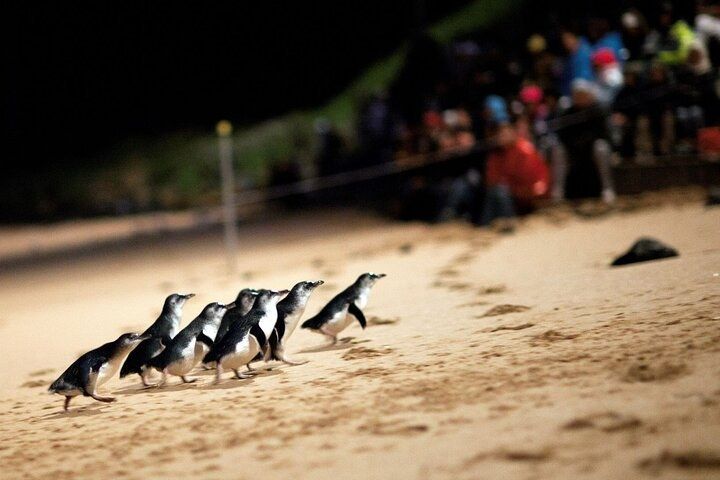
Guides at the Penguin Parade tally every little penguin that crosses Summerland Beach, night after night. Nature Parks scientists then average those tallies across the year, which is how they follow long-term change in the colony.
Nature Parks does not post the figure anywhere public. There is no live tally and nothing the next morning, so a number offered elsewhere as last night's total did not come from Phillip Island Nature Parks. Annual averages and the stand-out record nights are what gets published, and those are the figures to plan around.
Research is the reason the counting happens at all. Nature Parks was established in 1996 as a self-funded conservation organisation that reinvests visitor revenue into research, environment and education, and the crossing counts are among its longest-running datasets, going back to 1968.
How the nightly count changes through the year
Across twelve months the swing is wide enough that the month you pick matters far more than luck on the night. In 2021 the average moved from roughly 700 birds a night in July to roughly 2,300 in November.
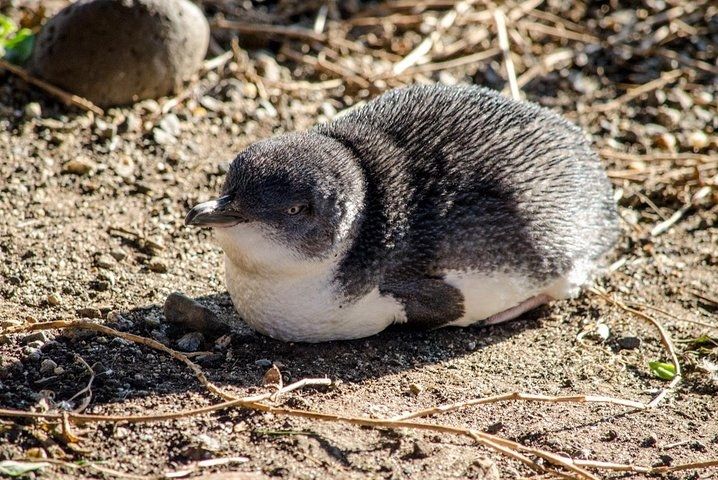
Breeding runs August to February, and that is when the beach is busiest, because adults are shuttling food back to chicks ashore. From the second half of February the annual moult takes hold. A bird then stays on land for a median of 17.5 to 18 days, with a recorded range of 12 to 25 days, fasting and losing close to half its body mass, so fewer birds cross the sand around then.
Nature Parks builds that variation into its own operations. The Ultimate Adventure Tour, which walks a small group to a secluded beach, is substituted with a Guided Penguin Tour when penguin numbers are unusually low or tides run higher than predicted.
| When | Birds crossing Summerland Beach |
|---|
| July 2021 | about 700 a night on average, the year's low |
|---|
| November 2021 | about 2,300 a night on average, the year's high |
|---|
| Peak periods | between about 3,000 and 5,000 a night |
|---|
| Record night | 5,219, a record at the time |
|---|
| Record broken again | 5,440, the second record inside five months |
|---|
A quiet night is still a full parade
Little penguins come ashore at sunset every single night of the year, so there is no closed season and no evening without a crossing. The event runs in all conditions and is never called off for rain, because the birds land regardless of what the weather is doing.
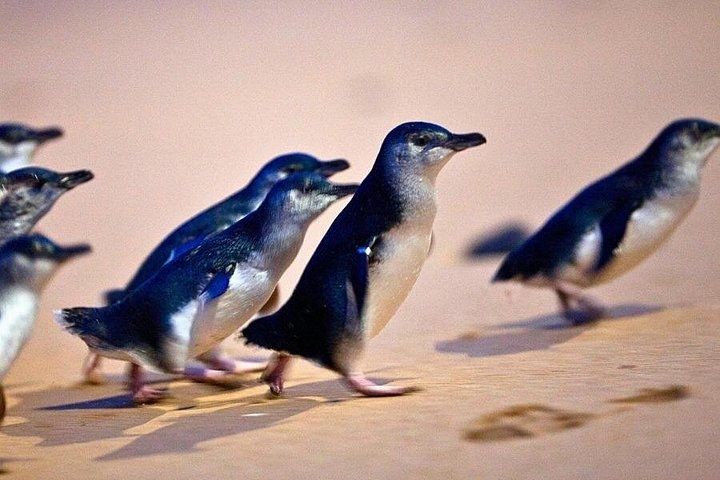
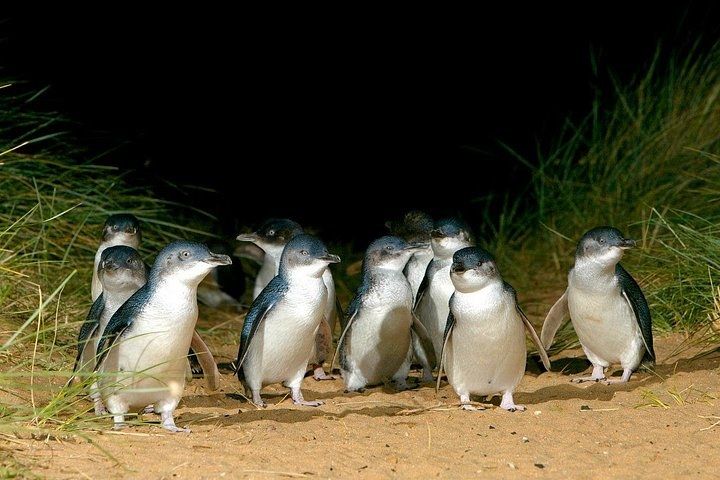
The arrival pattern is the same whatever the total. Penguins gather offshore in groups called rafts and wait for dusk before crossing the open sand together, using darkness and numbers against Pacific gulls, sea eagles and other predators, which is why the birds come in waves rather than a steady trickle. On a quieter night the waves are smaller and the gaps between them longer.
The same rules apply on every night of the year.
- Be on site at least an hour before the estimated arrival time for General Viewing, Penguins Plus and Penguins Premium; 30 minutes for Underground Viewing.
- Cameras, camcorders and phone cameras cannot be used after sunset, which covers the whole crossing, because sudden or unusual light frightens and disorientates the birds.
- Bring warm layers, a raincoat if rain looks likely, and a rug for the grandstand seats; the stands face a southern beach after dark.
- The site is cashless, with contactless payment only for tickets, retail and food.
- Burrow and boardwalk upgrade works are under way at the Parade, and the nightly arrival continues unaffected.
Small-group afternoon trip from Melbourne
If you would rather choose a comfortable season than gamble on a big count, this 8-hour minivan trip from Melbourne pairs the Nobbies, Seal Rocks and Moonlit Sanctuary with an evening at the Parade, from A$246 and rated 4.9 (885 reviews).
★ 4.9/5 · 885 reviews
The colony behind the nightly figure
The Summerland Peninsula colony is estimated at about 40,000 breeding little penguins, one of the largest colonies of the species. Monitoring records a rise from around 12,000 birds in the mid-1980s, so the size of the colony and the nightly count are two different measurements.
Any single evening's total is a small slice of that colony. Little penguins spend about 80 per cent of their lives at sea and adults can stay out for more than four weeks between visits ashore. During breeding, most Phillip Island birds feed within 50 kilometres of the colony, diving 1,300 to 2,000 times a day to depths of 10 to 30 metres and eating roughly 250 g of small fish and squid.
Summerland also holds the last surviving little penguin colony on Phillip Island, nine of the original ten having disappeared.
The habitat work that made room for more breeding pairs
Protection on this beach is old. A government reserve was declared over the colony in 1955 by the Department of Fisheries and Wildlife, and the 1985 Penguin Protection Plan began buying back the Summerland Estate, a subdivision cut into 776 lots in 1927 and built up with 190 homes directly on penguin ground. The Victorian Government completed that buyback by June 2010, removed the remaining houses and funded a three-year, A$3.4 million habitat restoration program.
The visitor centre was part of the same arithmetic. Demolishing the old centre and its coach park restored more than six hectares of penguin habitat, estimated to leave room for 1,400 additional breeding penguins. The current centre cost A$58.2 million and opened on 25 July 2019, with A$48.2 million coming from the Victorian Government's Regional Tourism Infrastructure Fund.
Work on the peninsula carries on along several lines.
- Revegetation and weed removal across the restored ground.
- Artificial nest boxes for burrowing pairs.
- Control of feral cats and rabbits.
- Fox eradication, completed in 2017 after a 20-year program that left the island fox-free and removed the main land predator.
Pick the season that fits your trip
Chasing a record night is not a plan you can book. Shoulder months on a weeknight give you the same guaranteed crossing with far fewer people around, while mid-December to late January, long weekends and school holidays are the declared peak periods, when extra travel time is needed and seating is not guaranteed even with a ticket. More than 700,000 people pass through each year.
Start time follows sunset, so it shifts by roughly two hours across the calendar. Nature Parks describes the centre filling from about 4pm in winter and about 6pm in summer, publishes a Penguin Arrival Calendar with an estimated time for each date, and opens the building at midday, with a 2pm opening on Christmas Day and the crossing going ahead that evening as usual.
The return leg is the part that catches people out. It is about 90 minutes from Melbourne to the island plus another 20 minutes past the San Remo bridge to 1019 Ventnor Rd, Summerlands, with the way back after dark, when wildlife including penguins crosses island roads, and no public transport runs back to Melbourne once the parade is over. A round-trip tour from Melbourne handles both legs.
Questions people ask
Are there nights when no penguins come ashore?
No. The count never drops to zero: birds land at Summerland Beach at every sunset, all year, with no closed season. What changes is the size of the groups crossing, which in 2021 averaged about 700 a night in July and about 2,300 in November.
Do more penguins cross in summer or in winter?
Numbers are higher in the breeding months, August to February, because adults are coming and going to feed chicks in the burrows. July was the low point of the 2021 averages at roughly 700 birds a night. Counts fall away again once the moult starts in the second half of February, when a bird stays on land fasting for a median of 17.5 to 18 days instead of returning from the sea each evening.
Why do the penguins arrive in waves instead of one by one?
Rafts form offshore first, and the group holds there until dusk before taking the open sand together. Darkness and numbers are their defence against predators such as Pacific gulls and sea eagles. That behaviour is why the beach can look empty for several minutes and then fill.
Does the weather change how many penguins cross?
Nature Parks does not publish counts broken down by conditions, so there is no figure to quote. The parade is never cancelled for rain, because the birds land whatever the weather does, and the open stands sit on a south-facing coast after dark. Dress warmly, carry a raincoat and take a rug for the seating.
How long can a penguin stay at sea between crossings?
Adults can remain at sea for more than four weeks at a stretch, fishing in Bass Strait and Port Phillip Bay, and they spend about 80 per cent of their lives in the water. That is the main reason a nightly total of a few thousand sits well below a colony estimated at about 40,000 breeding birds.
Read also