In shortPhillip Island Nature Parks runs the Penguin Parade. It was formed in 1996, is self-funded, and puts visitor revenue back into research, environment and education. A reserve was declared over the colony in 1955, the Summerland Estate buyback was finished in 2010, and the park now covers more than 1,805 hectares and takes more than 700,000 visitors a year.
1,805+ hectaresNature Parks reserve area
700,000+visitors each year
1996Nature Parks established
6+ hectareshabitat given back in 2019
How the protection effort began
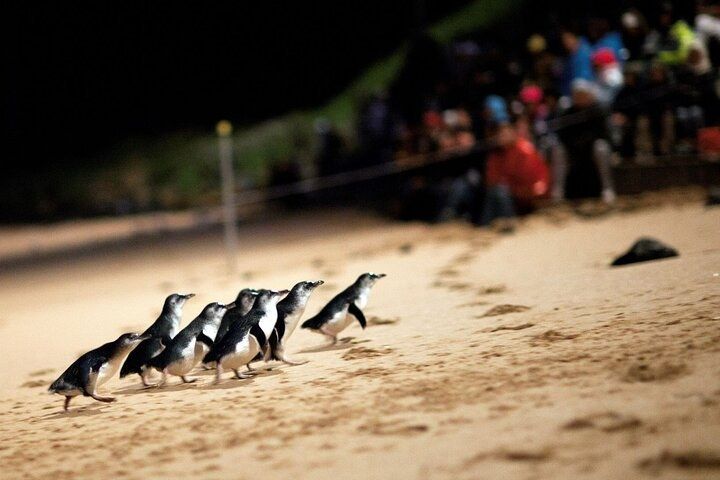
Tourists were being walked onto this beach long before anyone thought to look after it. Commercial viewing goes back to the 1920s, when local men led visitors down by torchlight to watch the nightly arrival, and the first access road went in late 1927. That same year the peninsula behind the beach was cut into 776 house lots and sold as the Summerland Estate.
Formal protection came three decades later. The Department of Fisheries and Wildlife declared a government reserve over the colony in 1955, which secured the viewing ground and left the burrow country on the peninsula in private hands. Ten little penguin colonies once sat around Phillip Island, and nine of them did not survive. The Summerland Peninsula holds the last one.
| Year | What happened |
|---|
| 1920s | Local men take tourists onto the beach by torchlight to watch the nightly arrival |
|---|
| 1927 | The Summerland Estate is cut into 776 lots on the colony's peninsula |
|---|
| Late 1927 | The first access road to the viewing site is built |
|---|
| 1955 | The Department of Fisheries and Wildlife declares a reserve over the colony |
|---|
| 1985 | The Penguin Protection Plan starts the buyback of the estate |
|---|
| 1996 | Phillip Island Nature Parks is set up as a single organisation |
|---|
| June 2010 | The buyback is completed and the remaining houses are removed |
|---|
| 2017 | The island is declared fox-free after a 20-year eradication program |
|---|
| 25 July 2019 | The current Penguin Parade Visitor Centre opens |
|---|
Buying back the Summerland Estate
By the time the conflict was understood, 190 homes stood on the subdivision. Little penguins nest in burrows dug into soft sand and soil behind the beach, so houses, gardens, driveways and cars sat on the habitat the colony depends on. The 1985 Penguin Protection Plan set out to buy those lots back from their owners.
Buying ran from 1985 to June 2010, when the Victorian Government completed it and the last houses came down. A three-year habitat restoration program worth A$3.4 million followed. That money went on replanting cleared ground, pulling out weeds, installing artificial nest boxes and holding down the numbers of foxes, feral cats and rabbits. Phillip Island was declared fox-free in 2017, twenty years of eradication work having taken the main land predator out of the picture.
Koalas in the afternoon, penguins after dark
This 9.5-hour day from Melbourne includes admission to the Koala Conservation Reserve and Penguin Parade general viewing, so both entries go to Nature Parks sites while the operator handles the driving in both directions. Prices start at A$180, and the rating stands at 4.8 from 928 reviews.
★ 4.8/5 · 928 reviews
Where the money from a night on the beach goes
Phillip Island Nature Parks was created in 1996 out of land the Shire and the Department of Conservation and Environment had managed separately. It is self-funded, and the official site says visitor revenue is what pays for its research, environment and education programs. The reserve it manages runs to more than 1,805 hectares across several separate areas, all owned by the Victorian State Government.
More than 700,000 people a year come for the parade, and the Victorian Government projects 840,000 a year by 2030. Very little of the work shows from the grandstand. The counting, the planting and the pest control carry on while visitors are watching the sand.
- Guides count every bird that crosses Summerland Beach, and those nightly counts are averaged each year to track long-term population change
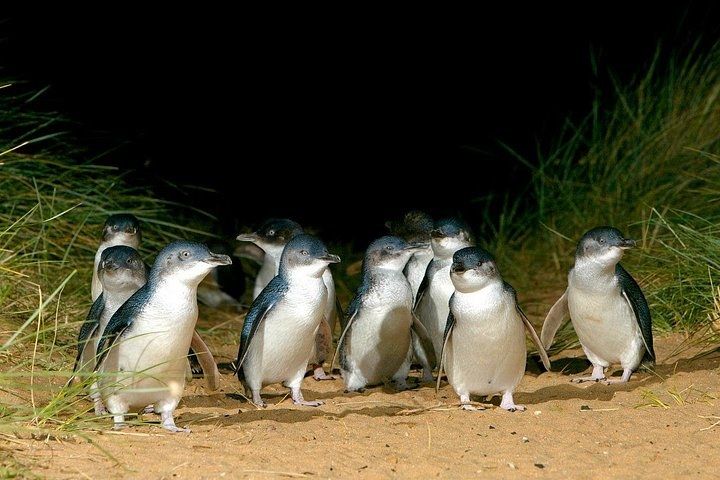
- Monitoring has recorded a rise from roughly 12,000 little penguins in the mid-1980s to an estimated 40,000 breeding birds on the Summerland Peninsula today, the largest colony of the species
- Revegetation, weed control, artificial nest boxes and continuing suppression of foxes, feral cats and rabbits on the peninsula are all funded from the same visitor income
- Education programs and the environment work come out of the same visitor revenue, with no separate admission for them
The visitor centre and the six hectares it gave back
The current Penguin Parade Visitor Centre opened on 25 July 2019 and cost A$58.2 million, with A$48.2 million of that from the Victorian Government's Regional Tourism Infrastructure Fund. It was built back from the colony rather than on top of it.
The old centre and its coach park were demolished, and the ground they stood on, more than six hectares, went back to the birds, with space there estimated at 1,400 extra breeding penguins. The building opens at midday every day, 2pm on Christmas Day, and the crossing only happens after dark, so plan on an afternoon and evening rather than a day out.
Burrow and boardwalk works under way now
Burrow and boardwalk upgrades are in progress at the Penguin Parade. The nightly arrival continues unaffected, according to the official site, which publishes no completion date and no list of affected paths, so check current conditions for your date before you travel.
The Nobbies, further west along the Boulevard, is in a similar half-open state. Its boardwalks and car park can be walked, but the Nobbies Centre, cafe and toilets are closed, so use the toilets at the Penguin Parade car park. The Boulevard between the two stays open to moving traffic and has no parking.
Use the last hour of daylight on the Parade boardwalks. Swamp wallabies, Eastern barred bandicoots, Cape Barren geese and short-tailed shearwaters turn up there reliably, and that hour is your only window for photographs: cameras, camcorders and phone cameras cannot be used after sunset, because sudden or unusual light frightens and disorientates the penguins.
Getting there and back after dark
The colony sits at the island's far western tip, at 1019 Ventnor Rd, Summerlands: Nature Parks reckons about 90 minutes of driving from Melbourne, then another 20 minutes once you have crossed the bridge at San Remo. Both legs have to be driven again in the dark, and drivers are warned to take particular care at dawn, dusk and night, when penguins and other wildlife cross island roads.
Public transport will not get you there and back. V/Line coaches out of Southern Cross Station terminate at Cowes, a long way short of Summerlands, and no service returns to Melbourne once the crossing has finished. The usual alternative is a day tour from Melbourne with parade entry included, which puts the admission that funds the colony and the two hours of driving into one booking.
Nature Parks' clothing advice is warm layers, a raincoat when rain looks likely, and a rug for the grandstand seats. The penguins come ashore whatever the weather, so nothing is called off for rain and you sit through what arrives. Carry a contactless card as well; the site takes no cash.
Questions people ask
Why is photography banned if the colony is doing well?
No camera, camcorder or phone camera may be switched on once the sun has gone down, and the birds land after that point. The reason is their eyes: sudden or unfamiliar light startles little penguins and can send them off course as they walk up the sand. Thousands of birds still land in front of the grandstand every night because the rule holds. Take your wildlife photographs on the boardwalks before dark.
Can I see the restored peninsula in daylight?
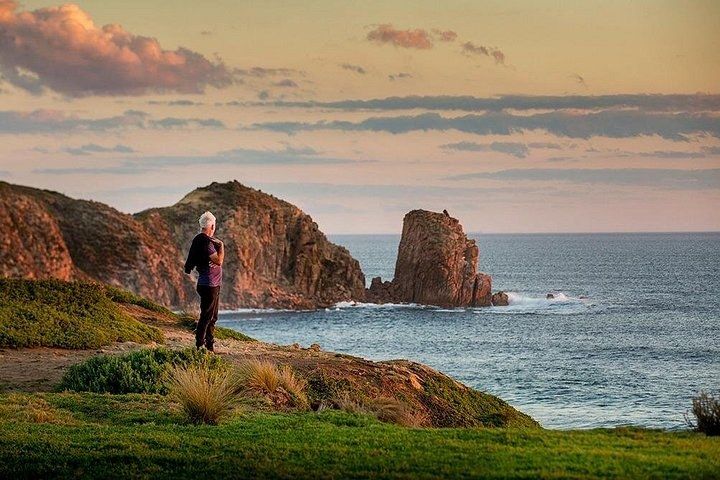
Yes. Nature Parks runs a Guided Daytime Adventure Tour of the Summerland Peninsula covering its history and the conservation work, and it asks for medium fitness. It is a walking tour, so it suits anyone who wants to stand on the ground where the houses were instead of only seeing the evening crossing.
Has the little penguin population actually increased?
The mid-1980s estimate was around 12,000 birds, and the Summerland Peninsula now holds an estimated 40,000 breeding little penguins. The guides who count every bird crossing the beach have also logged record nights of 5,219 and then 5,440 penguins, the second of those inside five months. Counts have been kept since 1968, which is what makes the trend measurable.
Will the current works affect my booking?
The burrow and boardwalk upgrades do not stop the penguins coming ashore, and the official site states the nightly arrival continues as normal. No finish date is published, and nor is a list of which paths and viewing areas are touched at any given time. Check the operator's current information close to your date rather than older write-ups.
What does the tour on this page include, and what does it not?
It covers premium coach travel with a local driver guide and live commentary, plus admission to the Koala Conservation Reserve and Penguin Parade general viewing. Meals, travel insurance and transfers to the pickup point are not included. You join the coach outside the Immigration Museum at 400 Flinders Street, on the Market Street corner, at 11:45am during winter and 1:45pm during summer. Commentary is live in English from the driver guide.
Read also