In shortThe Cape Woolamai walk is the island's longest marked coastal circuit: 8.1 km, about 4.5 hours, beginning with a ramp onto the beach and roughly 900 m of sand to a staircase up onto the headland. Shorter marked options run 4.4 km, 4.9 km and 7.2 km. The beacon lookout sits 112 metres above sea level, the highest point on Phillip Island.
8.1 kmlongest marked circuit
4.5 hourscircuit walking time
112 misland's highest point
500,000shearwaters from late September
Where the Cape Woolamai walk starts
Every route onto the headland begins on the sand. According to the official reserve page you take a ramp down onto the beach and walk roughly 900 m along it to a staircase that climbs onto the cape. That first stretch is soft underfoot and it is included in the distances below, so the 8.1 km circuit is not 8.1 km of formed path.
Car park location, capacity and any charge are not published on the official page, so treat the trailhead parking as something to sort out on the ground rather than something you can confirm in advance. Arrive with enough slack to park and still get the sand walk done before the tide and the wind decide the day for you.
Above the staircase the tracks are formed and signposted. The official description is honest about what that means in practice: a slight steady incline, occasional steps, and uneven surfaces in places. Walkers are told to stay on the paths, to watch for snakes in warm weather, and to keep clear of the steep cliffs that run alongside the tracks.
The four marked routes and how long they take
Work out how many hours you have before you choose a route. The Pinnacles walk is the shortest marked option and the only one the official page grades, at easy to moderate. The circuit is the longest and takes about four and a half hours, which is a half day once you add parking, the sand walk and a stop at the lookout.
If you want the view from the top without the full loop, the Beacon loop reaches the 112 m beacon lookout in 7.2 km and about four hours. The Old Granite Quarry loop sits between the two at 4.9 km. Times are the official estimates for an average walker; check the signage at the start on the day, since track conditions and detours change.
| Route | Distance | Time | Grading |
|---|
| Pinnacles walk | 4.4 km | about 2 hours return | easy to moderate |
|---|
| Old Granite Quarry loop | 4.9 km | about 2.5 hours | not stated |
|---|
| Beacon loop | 7.2 km | about 4 hours | not stated |
|---|
| Cape Woolamai circuit | 8.1 km | about 4.5 hours | not stated |
|---|
The Cape Woolamai circuit track: climb, granite and cliff edges
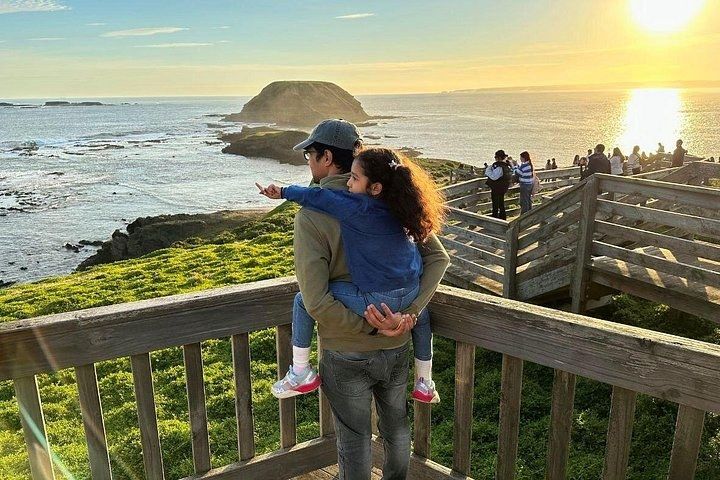
The circuit is the one that takes in everything: the granite pinnacles on the south-facing coast, the quarry ground, the cliff sections and the beacon. The climb is spread out rather than brutal, described officially as a slight steady incline with occasional steps, but you are gaining height to 112 metres, the highest ground on Phillip Island, and the whole headland is open to the weather on the way up.
Exposure is the thing people underestimate. There is no shelter built into these routes, and the tracks run beside steep cliffs for long stretches, so the official advice to stay on the path is worth following to the letter. Rhyll's figures give a sense of what you are walking in: an annual mean maximum of 18.8°C and mean minimum of 11.8°C, with July at 13.4°C and 8.2°C and August the wettest month at 76.6 mm. February is the warmest and the driest, 24.4°C and 37.0 mm, and it is also when snakes are most likely on warm tracks.
Carry water and a windproof layer whatever the forecast says, and do the Pinnacles walk instead if anyone in the group is unsure about four and a half hours on uneven ground.
Half a million shearwaters on the headland
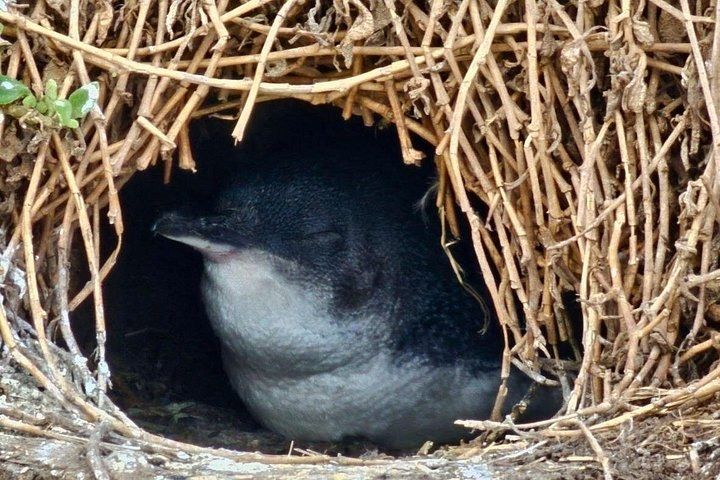
Cape Woolamai holds about half a million short-tailed shearwaters, which nest on the headland from late September after returning from the northern Pacific. Walking the circuit in October or November means walking over burrow country, which is the practical reason the tracks are fenced and signposted the way they are.
Each April the Nature Parks Shearwater Rescue Program patrols island roads to return fledglings that have strayed from the colony. The official page gives the late-September arrival and the April program; it does not publish a departure date, so do not plan a trip around seeing the birds leave.
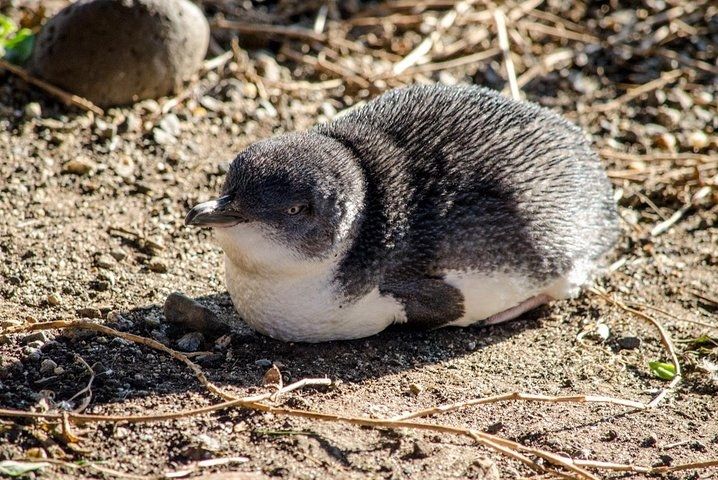
The same species turns up on the boardwalks at the Penguin Parade before dark, alongside swamp wallabies, Eastern barred bandicoots and Cape Barren geese, so a walker who times things well gets the colony by day and the boardwalks at dusk.
Fitting the walk around a parade after dark
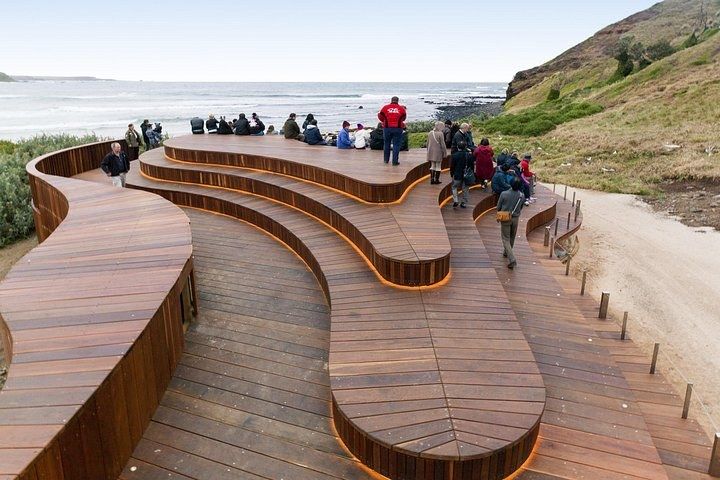
Timing decides whether this works. What sets your cut-off time on the headland is sunset: little penguins land at Summerland Beach after dark on every night of the year, so the hour you need to be back off the cape shifts by about two across the seasons. Nature Parks has the visitor centre filling from about 4pm in winter and about 6pm in summer, and its Penguin Arrival Calendar carries an estimate for the date you are walking. Subtract more again before you plan the day: the open-air viewing areas want ticket holders on site a full hour before that estimated arrival, and Underground Viewing 30 minutes before.
Set that against 4.5 hours on the circuit. In winter, with the centre already filling around 4pm, you would need to be on the sand not long after breakfast, walk without lingering, and still allow driving time west across the island. Nature Parks publishes 20 minutes from the bridge at San Remo out to 1019 Ventnor Rd, Summerlands, and does not publish drive times from individual island towns, so build in margin. In the longer-daylight months the same day is comfortable.
Day trippers out of Melbourne cannot make the two fit. Melbourne to the island is about 90 minutes, with another 20 minutes on from the bridge, and you cover both legs twice in a day; the second run is made after dark, on roads where wildlife crosses at dusk and through the night. Add a 4.5-hour walk in the middle and you are driving home tired. One more thing worth knowing before you plan the evening around photographs: cameras, camcorders and phone cameras cannot be used after sunset at the parade, so the walk is where your pictures come from.
Stay a night and the problem disappears. Cowes is the main township and the easiest base, with cafes, restaurants and shops within walking distance of accommodation, while Cape Woolamai, Surf Beach and the coastal areas nearby are mainly holiday homes and beach houses rather than hotel precincts.
- Winter day: circuit in the morning, be parked at Summerlands while it is still light, since the centre fills from about 4pm
- Summer day: the circuit still leaves room for a meal, with the centre filling from about 6pm
- One night on the island turns a rushed day into two unhurried halves
- Pull the estimate for the exact date you intend to walk from the Penguin Arrival Calendar, then plan the day backwards from it
Daylight on the west end, then the parade
An 8-hour minivan day from Melbourne that spends the light at the Nobbies, Seal Rocks and Moonlit Sanctuary, which is the part of the island a walker on the Cape Woolamai circuit will not reach on foot.
★ 4.9/5 · 885 reviews
What a walker cannot reach on foot
The circuit covers one headland at the eastern end of the island. Seal Rocks lies offshore from the Nobbies at the opposite, western end, and Moonlit Sanctuary is on the mainland on the Melbourne side. There is boardwalk walking at the Nobbies too, with the car park open, though the Nobbies Centre, cafe and toilets are shut at present; the public toilets in the Penguin Parade car park are the place to plan a stop.
If you are coming out of Melbourne and want those sights in daylight before the parade, a guided day covers the driving and the distance between them. Tour figures quoted here are Australian dollars.
Questions people ask
Is the Cape Woolamai walk suitable for children?
The Pinnacles walk is the one to pick, at 4.4 km and about two hours return, and it is the only route the official page grades, as easy to moderate. Signposting and formed surfaces apply across the headland, but children will still meet a steady incline, the odd flight of steps, patches of uneven ground and cliff edges close beside the track. Keep children on the path and leave the 8.1 km circuit for another trip.
Can I walk the circuit and see the Penguin Parade on the same day from Melbourne?
Not comfortably. The circuit alone runs about 4.5 hours, the drive is about 90 minutes to the island plus 20 minutes from the San Remo bridge, and you need to be at Summerlands before dark, with open-air viewing areas asking for an hour's lead. Doing both in one day from Melbourne means driving the second leg at night after a long walk.
When are the shearwaters on the headland?
They return to Cape Woolamai from the northern Pacific from late September, and about half a million of them nest on the headland. Each April the Nature Parks Shearwater Rescue Program patrols island roads to return fledglings that stray from the colony. The official page does not publish a departure date for the birds.
Where should I stay if I want a full day on the cape?
Cowes is the island's main township and the most popular base, with cafes, restaurants and shops within walking distance of accommodation, which solves dinner before a parade after dark. Cape Woolamai and Surf Beach are mainly holiday homes and beach houses rather than hotel precincts. Over on the mainland side of the bridge, San Remo puts you on the waterfront at the island's gateway, which adds a bridge crossing to every run out to the trailhead.
Do I need to worry about snakes?
The official advice for Cape Woolamai is to stay on the paths and watch for snakes in warm weather. February is the warmest month on the island, with a mean maximum of 24.4°C at the Rhyll station, so summer walks are when it matters most. Closed shoes and keeping to the formed track handle it.
Read also